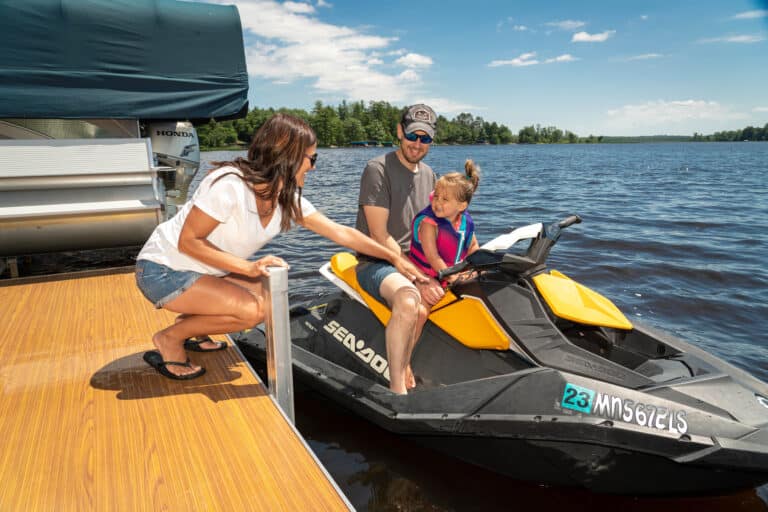
Four Removable Dock Systems, One Shared Engineering Standard
Every FLOE removable dock starts with an engineered heavy‑duty extruded aluminum frame that won’t corrode. They have a patented Easy‑Level™ leg system that adjusts from above the waterline with a cordless drill, and Quick‑Connect™ hardware that lets you reconfigure a section without tools. What differs is how each system meets the water. Pick the one that matches your lake.
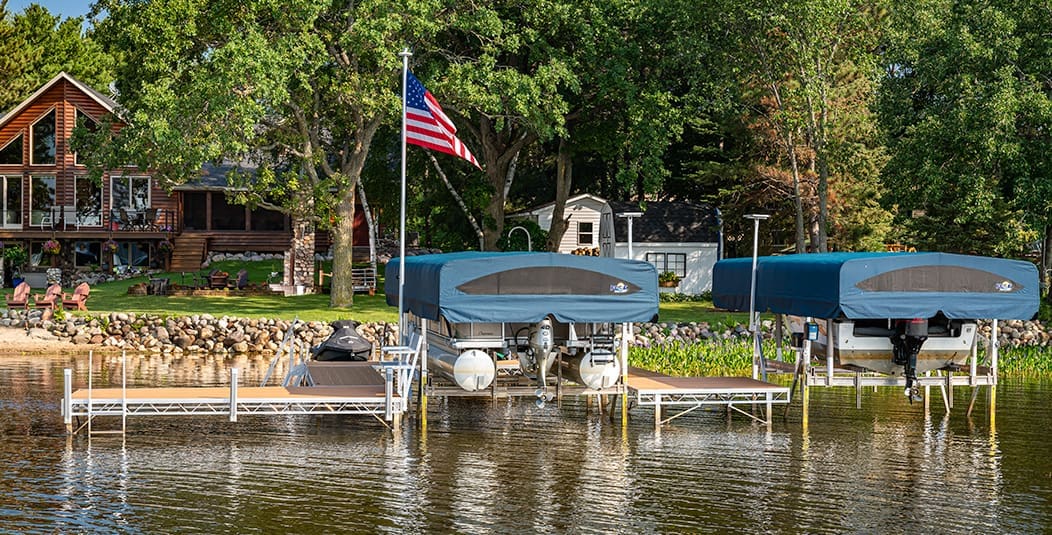
Roll-In Docks — for firm‑to‑medium bottoms with gentle to moderate slopes
Roll‑in docks ride on wheels. One person can walk a typical dock system into place each spring and pull it back out in fall — no wading, no muscling individual sections. FLOE’s Quick‑Attach™ track and Quick-Connect TM system means sections connect (and disconnect) in seconds. If your shoreline lets you roll it in, this is the fastest, most forgiving way to set up for the season. Best for water depths from a few inches out to about nine feet.
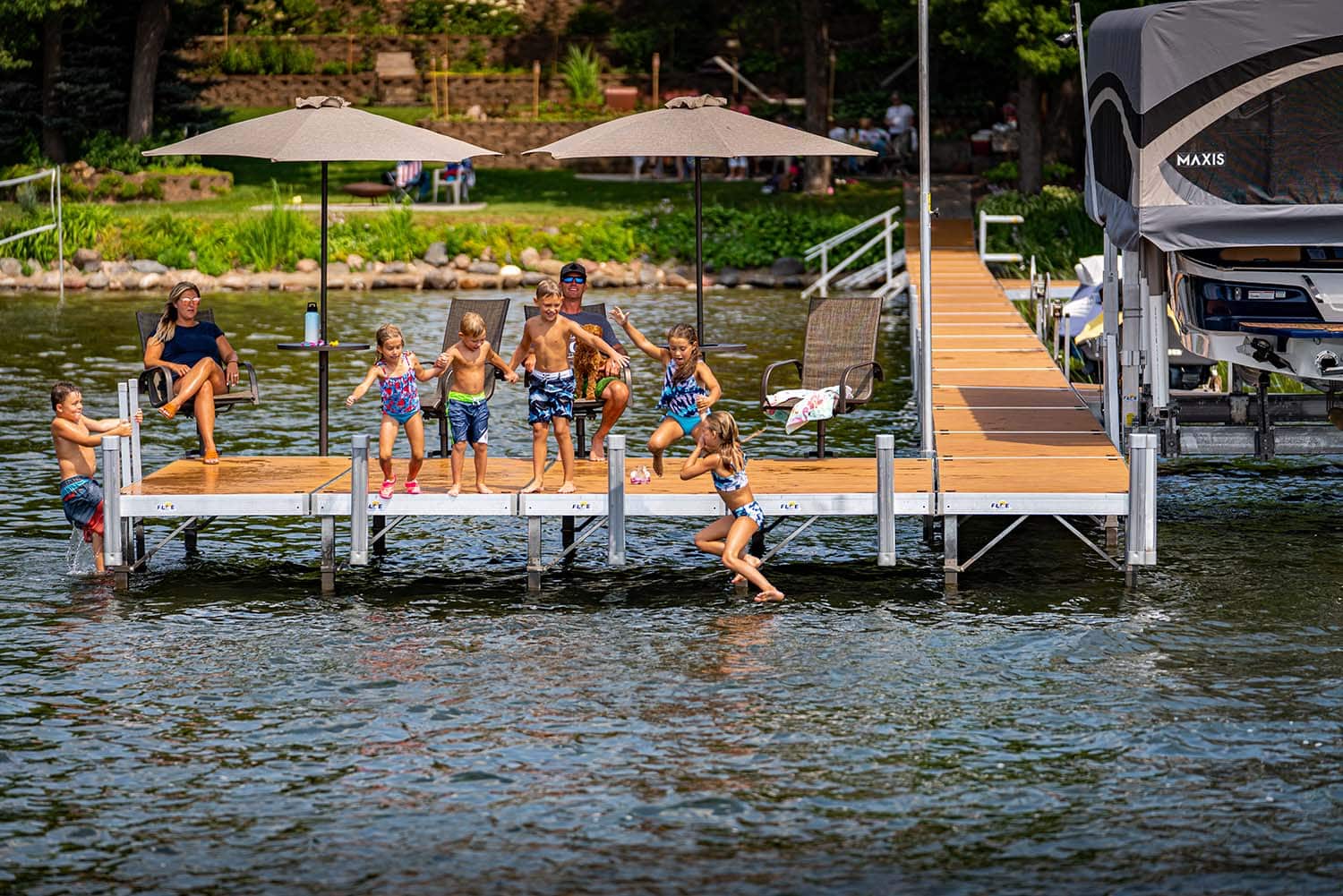
Sectional Docks — for steep shorelines, seawalls, minimal storage space, and hard-to-muddy lake bottom.
Sectional docks break down into individual pieces with no tools — pull the spring pin, turn the knob, slide the leg out. The whole system stacks compactly on shore, even on a hill. If wheels won’t roll where you live (steep bank, soft bottom, limited yard), sectional gives you the same FLOE engineering in a system that comes apart by hand. Leg kits handle water and mud depths up to 82 inches.
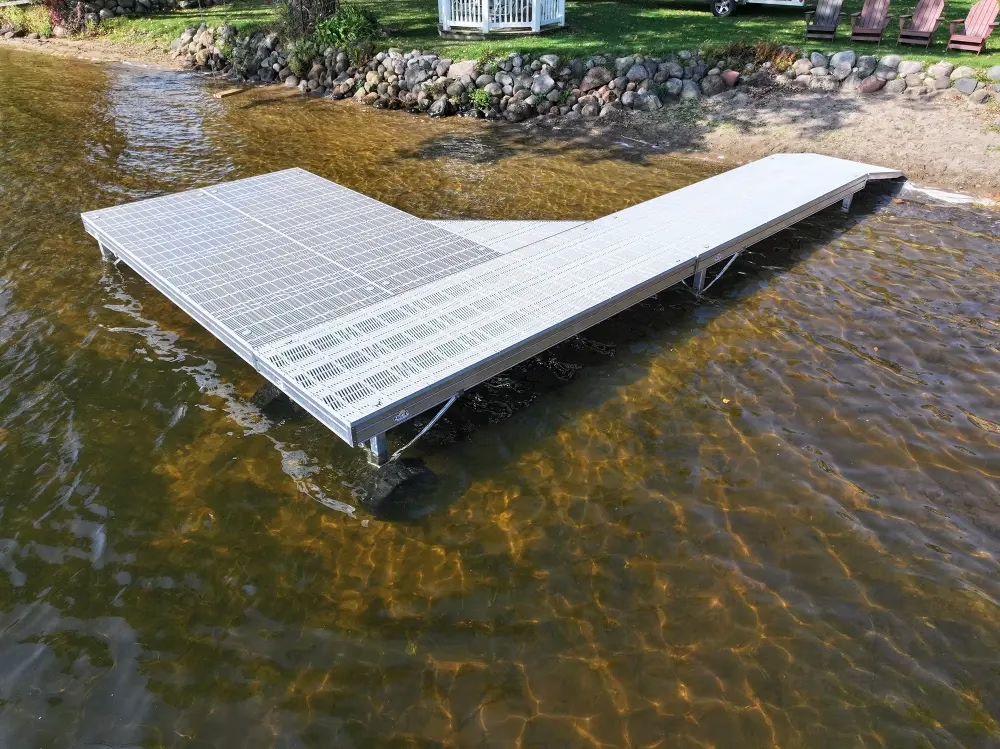
VHD docks — dent‑proof Floe‑Master decking allows waves to pass through in rough water.
Versatile Heavy Duty is a heavy‑duty upgrade line featuring FLOE’s exclusive Floe‑Master perforated aluminum decking. It resists dents from hail, stays cool, sheds sand, and allows waves and 45% more light to pass through. Built on a rigid aluminum frame with double‑braced Easy‑Level™ legs, it can be installed as roll‑in or sectional, making it versatile for high‑traffic areas, resorts, parks, and windy shorelines.
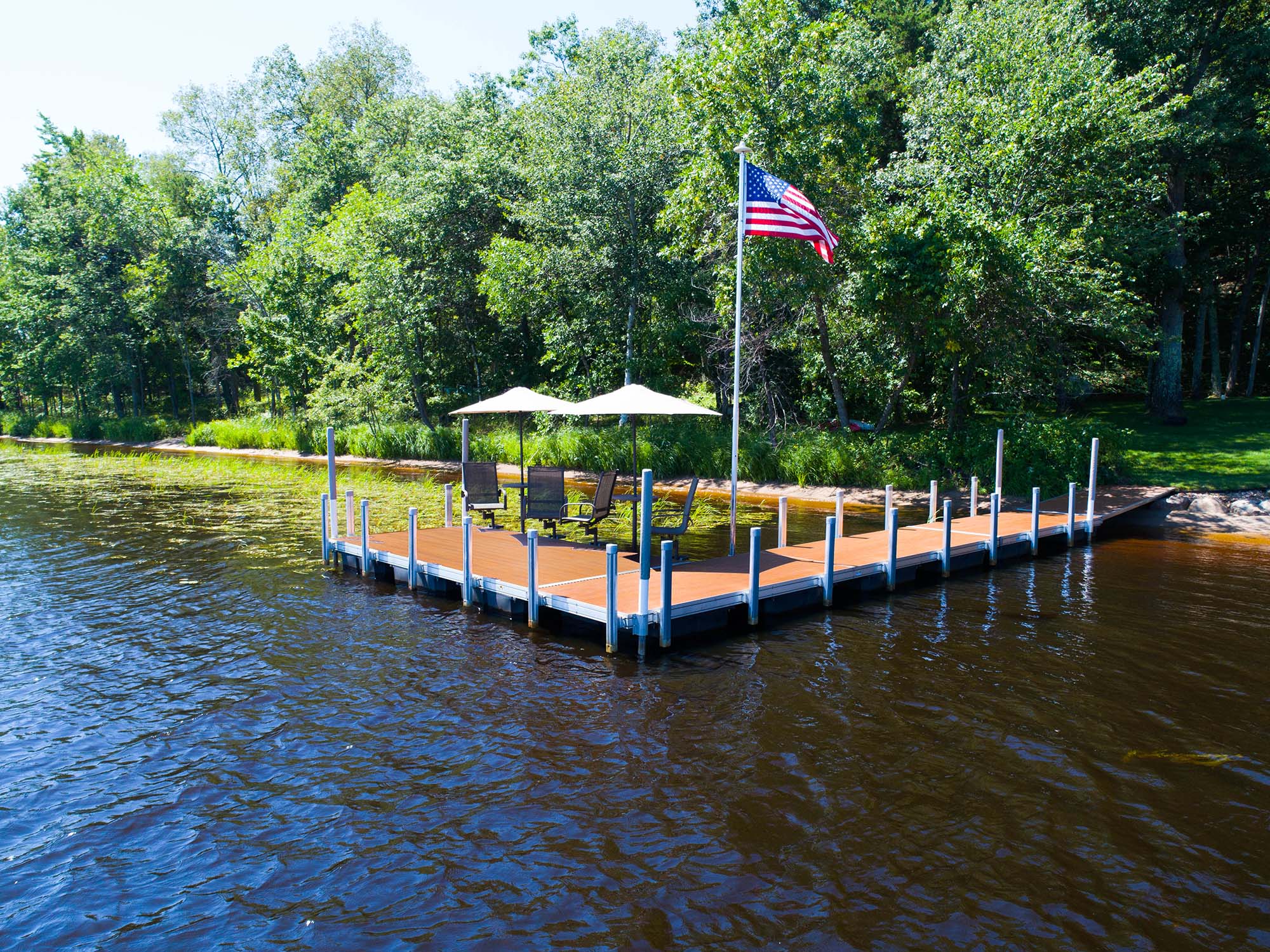
Floating Docks
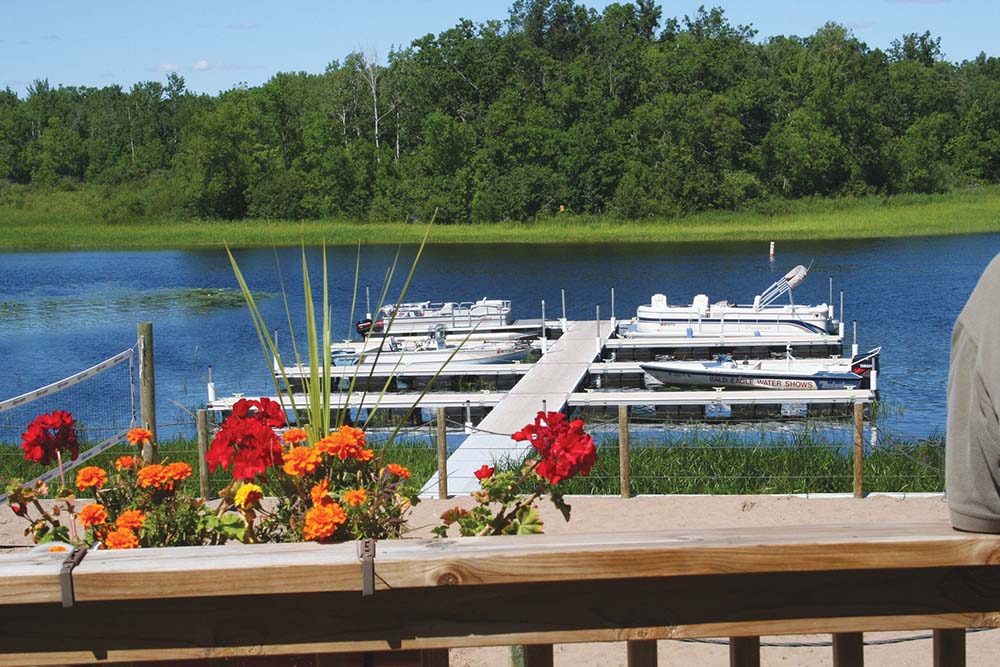
When the water won’t stay still — reservoirs, rivers, lakes with steep drop‑offs — a floating dock is the only system that stays at boat height. FLOE’s floating docks ride on foam‑filled, rotationally molded floats with a heavy‑duty aluminum frame on top. Guide‑pole anchoring keeps the system tracking through up to 10 feet of vertical water swing without scraping or drifting. Float capacity scales from 1,800 lb on a small 3×16 to over 11,000 lb on an 8×24.
How to choose between roll‑in, sectional, floating and VHD
Picking the right system for you depends on your shoreline, landscape, lake bottom, and use. The following factors will steer you toward the best fit.
Shoreline slope
Gentle grade
A roll‑in dock walks right into the lake. Each section rides on indestructible high‑density polymer wheels, so you roll most of the weight rather than lifting it.
Cliff or seawall
A floating dock can hang off the wall and stay at boat height even when the shoreline drops straight into deep water.
Steep bank where and minimal storage area
Sectional docks handle elevation change cleanly because each section lifts apart, have legs that remove in seconds with no tools, and stacks neatly. VHD docks use the same Easy‑Level™ legs and modular sections and can be configured by your dealer to whatever dock layout you prefer.
Shoreline characteristics vary greatly with floating docks. High fluctuation, depth, and lake bottom consistency can sometimes point to floating.
Water level changes
Stable lake with in-season fluctuation up to about 12”
Any removable dock will work, and roll‑in and sectional systems are leveled and adjusted easily with FLOE’s exclusive Easy-Level and a cordless drill.
Fluctuating reservoir or river
A floating dock adjusts continuously with water depth changes.
Storage space
Big yard or lake garage
A roll‑in dock can be removed as one unit with sections still connected, ready to roll in again next spring. The modular design also allows it to be disassembled and stored in individual sections.
Small yard or steep hillside
Sectional docks disassemble to a compact stack that fits behind a shed or garage. Even a large VHD commercial layout breaks down into modular sections for off‑season storage.
Roll‑in vs. sectional vs. floating vs. VHD dock comparison
Best bottom type
Roll‑in Dock
Light mud, Firm sand & gravel
Sectional Dock
Medium mud, firm sand and hard bottom
Floating Dock
Any (no bottom contact)
VHD Dock
Same as roll-in and sectional depending on legs
Decking
Roll‑in Dock
Aluminum / gray or chestnut
Sectional Dock
Aluminum / gray or chestnut
Floating Dock
Aluminum / gray or chestnut
VHD Dock
Floe‑Master perforated aluminum (dent‑proof)
Water depth range
Roll‑in Dock
A few inches to ~9 ft
Sectional Dock
Up to 82 in (water & mud)
Floating Dock
Deep & fluctuating
VHD Dock
Same as roll-in and sectional
Water‑level adaptability
Roll‑in Dock
Good (re‑level with drill)
Sectional Dock
Good (re‑level with drill)
Floating Dock
Excellent (floats with water)
VHD Dock
Good (re‑level with drill)
Steep shorelines
Roll‑in Dock
Fair
Sectional Dock
Excellent
Floating Dock
Good/not really relevant
VHD Dock
Good
Seasonal installation
Roll‑in Dock
Easiest (rolls in)
Sectional Dock
Moderate
Floating Dock
Easy
VHD Dock
Moderate
Storage footprint
Roll‑in Dock
Larger
Sectional Dock
Compact (stacks)
Floating Dock
Moderate
Compact (modular)
Layout flexibility
Roll‑in Dock
Excellent
Sectional Dock
Excellent
Floating Dock
Excellent
VHD Dock
Excellent
Structural capacity
Roll‑in Dock
Residential/light commercial
Sectional Dock
Residential/light commercial
Floating Dock
Residential/light commercial
VHD Dock
Residential Heavy‑duty / commercial
Ideal use area
Roll‑in Dock
Gradual firm shorelines
Sectional Dock
Steep, firm, soft or tight‑storage sites
Floating Dock
Reservoirs, rivers & deep lakes
VHD Dock
Residential, Marinas, resorts
Feature
Roll‑in Dock
Sectional Dock
Floating Dock
VHD Dock
Best bottom type
Light mud, Firm sand & gravel
Medium mud, firm sand and hard bottom
Any (no bottom contact)
Same as roll-in and sectional depending on legs
Decking
Aluminum / gray or chestnut
Aluminum / gray or chestnut
Aluminum / gray or chestnut
Floe‑Master perforated aluminum (dent‑proof)
Water depth range
A few inches to ~9 ft
Up to 82 in (water & mud)
Deep & fluctuating
Same as roll-in and sectional
Water‑level adaptability
Good (re‑level with drill)
Good (re‑level with drill)
Excellent (floats with water)
Good (re‑level with drill)
Steep shorelines
Fair
Excellent
Good/not really relevant
Good
Seasonal installation
Easiest (rolls in)
Moderate
Easy
Moderate
Storage footprint
Larger
Compact (stacks)
Moderate
Compact (modular)
Layout flexibility
Excellent
Excellent
Excellent
Excellent
Structural capacity
Residential/light commercial
Residential/light commercial
Residential/light commercial
Residential Heavy‑duty / commercial
Ideal use area
Gradual firm shorelines
Steep, firm, soft or tight‑storage sites
Reservoirs, rivers & deep lakes
Residential, Marinas, resorts
What it costs and what it includes
FLOE removable dock systems are sold through a professional dealer network across the United States and Canada. Pricing depends on length, configuration, decking choice (standard grey aluminum or wood‑look Aluma‑Grain™), and accessories. Use our Dock & boat lift pricing guide for current ranges and have a dealer build a quote for your exact shoreline. Need help? Find a FLOE dealer near you to discuss seasonal dock systems and deep‑water installations.
Customize Your Dock System with Accessories
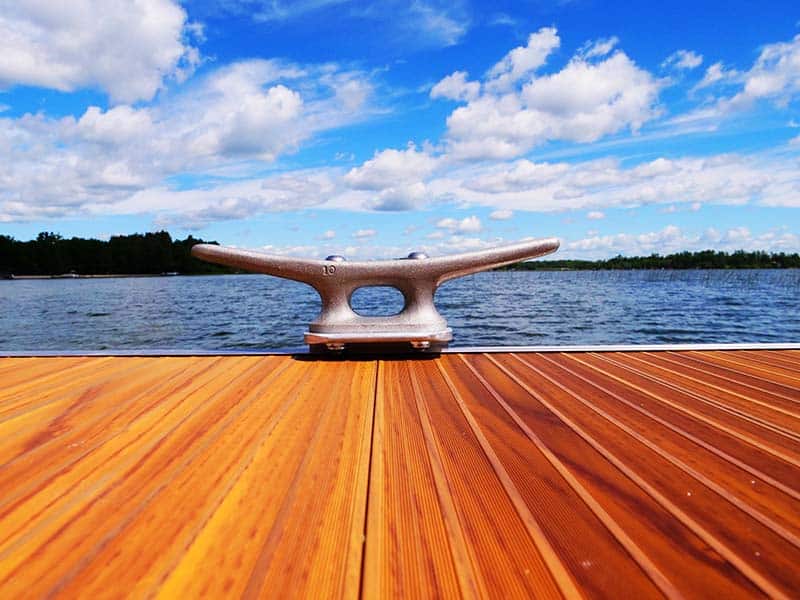
A dock is more than a platform on the water — the right accessories make it safer and more enjoyable. Popular add‑ons include benches, ladder and step systems, bumpers, storage boxes, mooring whips and furniture packages. FLOE accessories clip into the Quick‑Attach™ track, so you can place them anywhere on the dock’s side and reposition them without drilling.
Why Lakefront Owners Choose FLOE
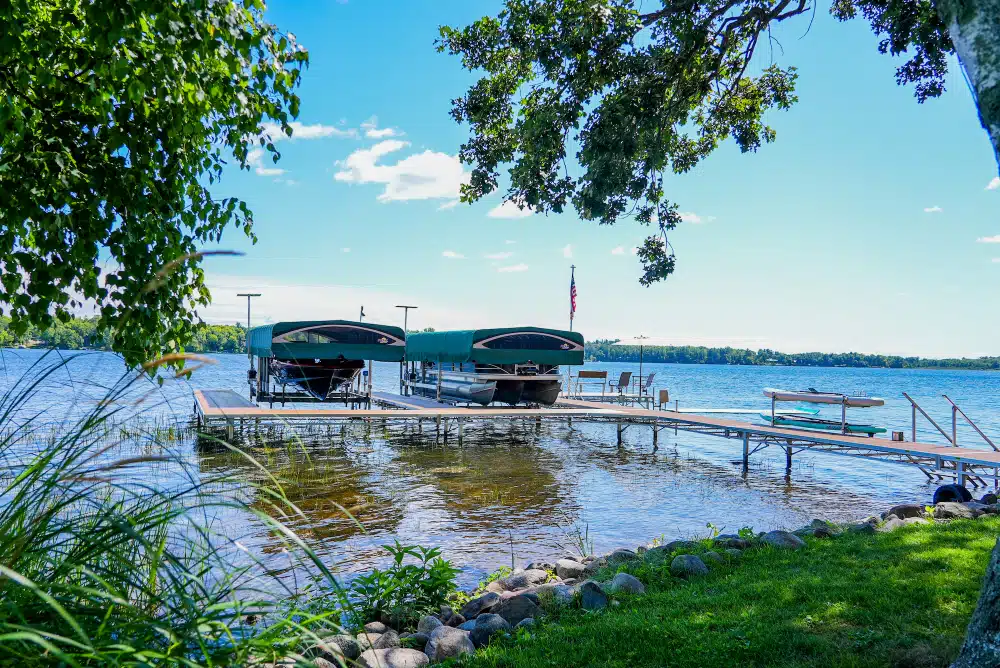
Three themes show up over and over in customer reviews: the docks are quiet (no wood swelling, no squeaking welds); the install is genuinely a one‑person job thanks to Easy‑Level™ legs and Quick‑Connect™ hardware; and the systems outlast the boats they hold. FLOE has been building aluminum waterfront systems in McGregor, Minnesota since 1983 — with three production facilities and one dealer network across the United States and Canada — and it offers a better way to buy. The proprietary Easy‑Level™ legs let you level the dock from above the deck, while Quick‑Connect™ hardware means you can reconfigure layouts without tools. Roll‑in docks use high‑density polymer wheels to reduce lifting effort, while sectional and VHD docks stack neatly for storage. The exclusive Floe‑Master decking on VHD docks provides a quiet, high‑traction surface that stays cool, resists hail damage and lets waves pass through. Maintenance‑free, powder‑coated aluminum decking with a baked‑on, anti‑skid surface keeps your feet cool and safe. Learn more about FLOE’s history and production facilities in Built in McGregor, Minnesota since 1983.
Frequently Asked Questions About Removable Docks
What is a removable dock?
A removable dock is a dock system designed to be installed in spring and pulled out before ice forms in fall. FLOE’s roll-in, sectional, floating, and VHD systems are all removable and use modular components to make seasonal installation a one-person job.
Are roll‑in docks easy to install?
Roll‑in docks ride on wheels, so you roll most of the weight rather than lifting it. One person can typically walk an entire system into place each spring and pull it back out in fall with no wading and no muscling individual sections.
Which dock is best for deep water?
Floating docks are the best choice for deep water and fluctuating water levels. They rise and fall with the water and stay at boat height where legs can’t reach the bottom — FLOE floating docks track through up to ten feet of vertical water swing.
Do VHD docks work with accessories?
Yes. VHD docks use the same Quick‑Attach™ track as FLOE’s residential docks, so you can clip on cleats, bumpers, ladders, lights and furniture without drilling. The extra‑rigid aluminum frame and exclusive Floe‑Master perforated decking are engineered for heavy, high‑traffic use, allowing waves to pass through when storms pass through.
How do I choose between roll‑in and sectional docks?
Roll‑in docks are ideal for firm bottoms and gentle slopes and roll as one unit, while sectional docks excel on steep, soft or uneven terrain and stack compactly for storage. Choose roll‑in when you have firm footing and room to store it; choose sectional when wheels won’t roll or yard space is tight.
Can I combine dock types?
Yes. Because every FLOE system shares the same Quick‑Connect™ hardware, you can typically connect floating sections to sectional or roll‑in docks to create a hybrid layout that adjusts with your shoreline. Work with a FLOE dealer to design a custom system.
What kind of maintenance does a removable dock require?
Very little. All FLOE docks are built from rust-resistant aluminum with maintenance-free decking. Inspect the hardware annually and rinse off debris. Floating docks require minimal upkeep because there are no legs to adjust.
Ready to Design Your Waterfront System?
Every shoreline is different. Water depth, bottom conditions, seasonal changes and storage space all influence which dock and lift system is right for you. Use FLOE’s Design‑A‑Dock™ tool to build a custom layout or connect with a local dealer for a personalized recommendation.