

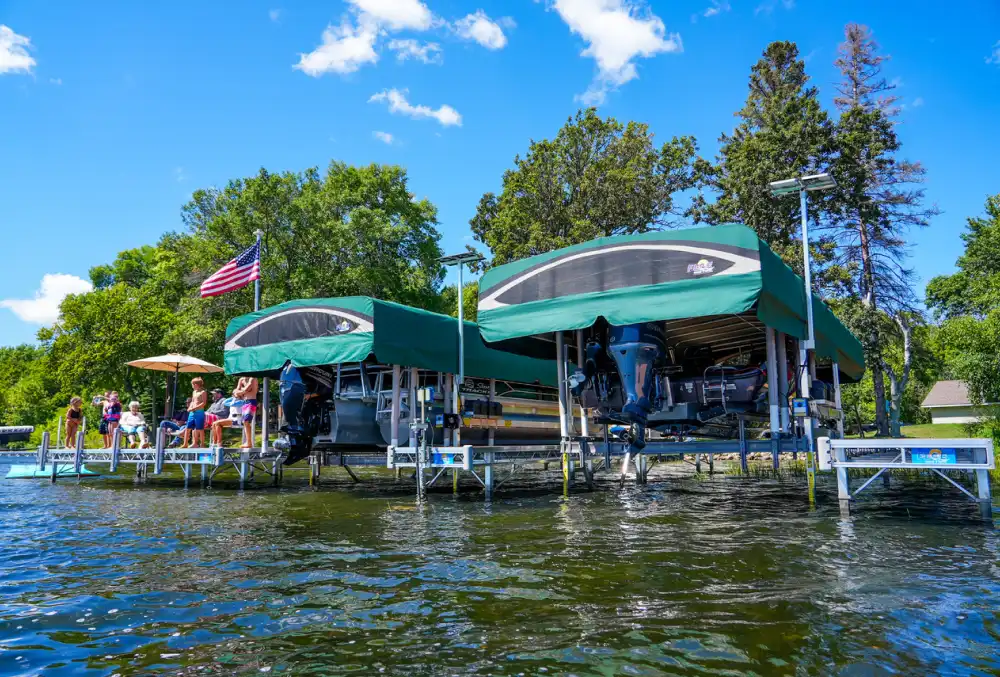
A dock or boat lift is a long-term waterfront investment. The manufacturer matters, but the name on the frame is only one part of the decision. Buyers should also evaluate how the system is engineered, adjusted, installed, maintained and supported over time.
This guide explains the questions worth asking when comparing dock and boat-lift manufacturers—and shows how FLOE approaches the ownership challenges that matter at the shoreline.
Disclosure: This guide is published by FLOE International, a manufacturer of aluminum docks and boat lifts. FLOE product information is based on current FLOE materials. Other manufacturers are identified only to help buyers recognize brands they may encounter; their products, specifications, warranties and availability should be confirmed directly with those companies.
The Right System Depends on the Property and Watercraft
Two waterfront owners may need very different products even when their boats are similar. Shoreline access, bottom conditions, water depth, water-level changes, exposure and seasonal routines all influence the system that should be considered.
Before comparing manufacturers, gather information about:
-
Shoreline slope and equipment access
-
Water and mud depth
-
Lake-, river- or coastal-bottom conditions
-
Water-level changes
-
Wind, waves, current and ice exposure
-
Local permits and association requirements
-
Dock installation, removal and storage needs
-
Desired dock length, width and layout
-
Watercraft type, weight and dimensions
-
Hull, pontoon or tritoon configuration
-
Boarding, canopy and accessory preferences
-
Local delivery, installation and service availability
Use the same property and watercraft information when speaking with each manufacturer or dealer. That makes the comparison more meaningful than reviewing model names or advertised features alone.
Look Beyond Rated Capacity
Rated capacity is important, but it does not determine the complete lift configuration by itself. The lift frame, drive, support system, water depth, lift travel, canopy and installation approach must work together.
Capacity and Watercraft Information
Begin with the weight of the watercraft, fuel, batteries, gear and installed equipment. Also record the beam, overall length, hull or tube configuration and the height of towers, windshields or Biminis.
Ask how the manufacturer or dealer determines:
-
Recommended capacity
-
Frame width and length
-
Bunk or cradle configuration
-
Guide-in placement
-
Motor, propeller, skeg and transducer clearance
-
Lift travel and water-depth requirements
-
Canopy width, length and height
Drive System
Compare how the lift raises and lowers the watercraft. Depending on the manufacturer and model, systems may use manual winches, electric winches, cables, hydraulics or screw-drive mechanisms.
Ask:
-
Which moving parts require inspection, adjustment or replacement?
-
What routine lubrication or maintenance is required?
-
Where are the drive components positioned relative to the water?
-
What happens if power is unavailable?
-
Are wired, wireless, solar-charging or manual-operation options available?
-
How are travel limits controlled?
Frame Construction and Adjustment
Review the frame material, connection methods, bracing, leg adjustment and published operating limits. Do not assume that every aluminum frame is engineered or serviced in the same way.
Ask whether routine height adjustment can be performed from above the water and what equipment is needed to install, remove or reposition the lift.
Watercraft Support
The support system should be selected for the boat’s hull, tubes, lifting points and running gear. Ask how the manufacturer addresses pontoons, tritoons, wake boats, fishing boats, runabouts and personal watercraft.
The watercraft manufacturer’s lifting and support guidance should remain part of the final decision.
Canopy System
Compare the canopy frame, fabric, coverage, tensioning method, access and clearance—not color alone.
Review:
-
Frame dimensions
-
Fabric coverage and water resistance
-
Tower and windshield clearance
-
How the fabric is installed and removed
-
Tensioning and retention systems
-
Airflow and access around the boat
-
Replacement-fabric availability
-
Warranty terms and exclusions
Installation and Seasonal Handling
Ask what must happen between delivery and first use. Consider assembly, leveling, positioning, anchoring and any equipment required for installation or removal.
For waterfronts where the lift must be removed, compare wheel kits, flotation systems, storage requirements and the availability of dealer-provided seasonal service.
Match the Structure to the Shoreline
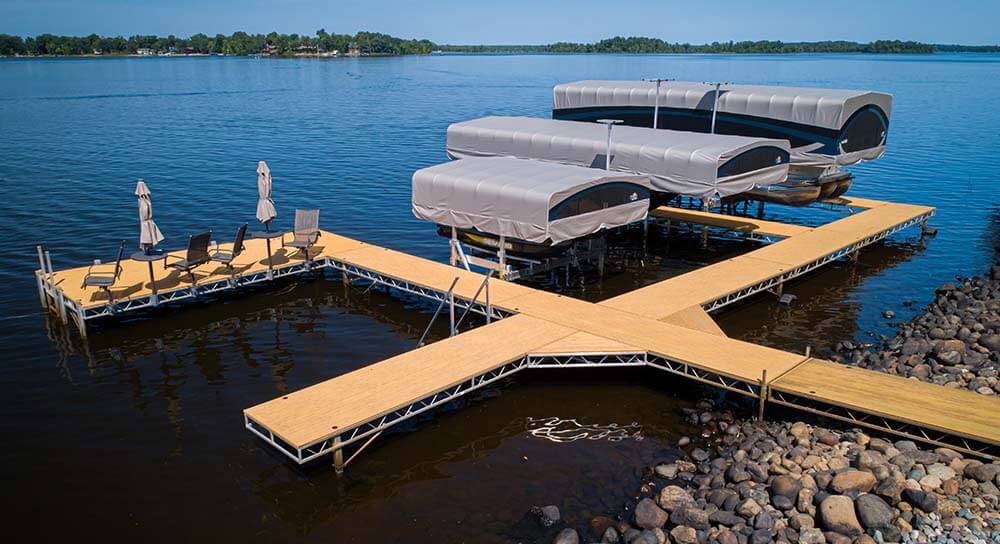
A dock should be selected for the site before accessories and appearance become the deciding factors. Compare how each manufacturer addresses support, adjustment, connection, installation and changing waterfront needs.
Dock Type and Site Fit
Manufacturers may offer roll-in, sectional, floating, heavy-duty or other dock systems. The appropriate starting point depends on shoreline access, slope, bottom firmness, water depth, water fluctuation, exposure and seasonal requirements.
Ask the dealer to explain why a recommended dock type suits the property rather than relying only on a product-category description.
Leveling and Height Adjustment
Water levels and bottom conditions change. Review how the dock is leveled during installation and adjusted throughout the season.
Ask:
-
Can height adjustments be made from the walking surface?
-
What tools are required?
-
How much adjustment does the selected support system provide?
-
Must someone enter the water to reposition hardware?
-
How are settling and uneven bottom conditions addressed?
Section Connections and Modularity
Compare how sections attach, how the connection manages movement and how easily the layout can be expanded or rearranged.
Review the available:
-
Straight sections
-
Angled sections
-
Sundecks and platforms
-
Shore-end ramps and transitions
-
Boat slips
-
Gangways
-
Corner and transition components
Installation, Removal and Storage
The dock’s ownership experience includes the first and last day of every season. Ask how much each section weighs, how the system moves, what equipment is required and how much storage space is needed.
If a dealer provides installation and removal services, compare the service area, scheduling, pricing and storage options separately from the product price.
Decking
Compare decking by more than appearance. Consider surface texture, heat, drainage, airflow, maintenance, replacement and how the material performs in the expected environment.
Accessories and Future Changes
Review how ladders, steps, handrails, seating, bumpers, cleats, storage and lighting attach to the dock. Ask whether accessories require drilling and whether they can be repositioned as the layout changes.
Stability, Anchoring and Exposure
The support and anchoring plan should reflect the dock type, bottom conditions, water depth, wind, waves, current and storm exposure. Ask what site information is required and who is responsible for approving the final plan.
Compare the Complete Experience
Product specifications describe the equipment. These questions help reveal what ownership may look like after the purchase.
Maintenance and Serviceability
Ask for the current maintenance schedule and owner’s manual before buying. Identify wear components, lubrication points, inspection intervals and any service procedures that require a dealer.
Also ask:
-
Are common replacement parts stocked locally?
-
Can components be replaced individually?
-
How are older models supported?
-
Is technical assistance available to owners and dealers?
-
What maintenance is required to preserve warranty coverage?
Warranty Coverage
Do not compare warranties by the largest number printed in a headline. Read the written terms for:
-
Parts and labor periods
-
Structural coverage
-
Prorated coverage
-
Accessory and fabric coverage
-
Commercial-use limitations
-
Transferability
-
Required maintenance
-
Travel, mileage and freight charges
-
Environmental and installation exclusions
-
Claim authorization and service procedures
Request the current written warranty for the exact dock, lift, drive, canopy and accessories being considered.
Dealer and Service Network
A knowledgeable local dealer can influence product selection, installation quality and long-term support. Compare what is actually available in your area.
Dealer services may include:
-
Site or equipment evaluation
-
Product configuration
-
Current pricing and availability
-
Delivery and assembly
-
Installation and anchoring
-
Seasonal installation and removal
-
Parts and maintenance
-
Warranty support
Services vary by dealer. Confirm the support included in each quote.
Complete Project Price
Compare complete configurations rather than a frame or section price. Include the dock or lift, decking, drive, canopy, supports, accessories, delivery, installation, anchoring, permitting, taxes and seasonal services.
What Makes a Boat Lift Reliable?
A reliable boat lift is more than a capacity rating. Buyers should consider the drive system, number of wear components, maintenance requirements, frame construction, adjustment method, serviceability, parts availability and long-term dealer support.
FLOE designs its boat lift systems around simplified adjustment, serviceability and long-term ownership. VSD models use a vertical screw-drive mechanism, while FLOE’s aluminum frame construction, Easy-Level™ adjustment system and authorized dealer network are designed to address common ownership and maintenance challenges over the life of the lift.
How FLOE Designs for Long-Term Reliability and Ownership
FLOE has designed and manufactured aluminum products in Minnesota since 1983. Its dock and boat-lift systems are developed around common ownership challenges such as adjustment, configuration, installation, access and equipment protection.
Easy-Level™ Adjustment
FLOE’s patented Easy-Level™ system is designed to simplify dock and lift height adjustment from above the water. The available adjustment range and procedure depend on the selected product and support-leg configuration.
Quick-Connect™ Dock Sections
Quick-Connect™ hardware allows FLOE dock sections to be joined, separated and rearranged without turning the entire waterfront into a permanently fixed layout. Available sections and connection details vary by dock system.
Quick-Attach™ Accessories
The Quick-Attach™ track allows many FLOE dock accessories to be positioned along the dockside without drilling into the primary frame. Owners can adjust accessory placement as walking routes and waterfront routines change.
V-Series and VSD Boat Lifts
FLOE offers vertical boat lifts with multiple capacity, frame and drive options. V-Series models use manual or electric winch configurations, while VSD models use a vertical screw-drive mechanism.
The appropriate model still depends on the watercraft, water depth, frame dimensions, support system, lift travel and desired operation.
Modular Dock Families
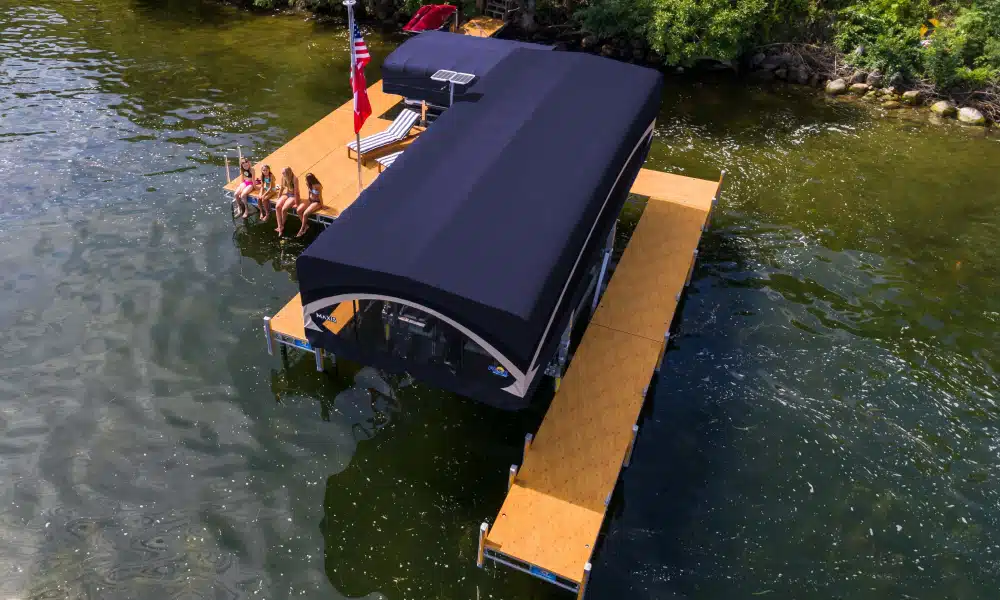
FLOE offers roll-in, sectional, floating and VHD dock systems for different waterfront conditions and installation approaches. Product selection should begin with the shoreline rather than an assumption that one dock family fits every property.
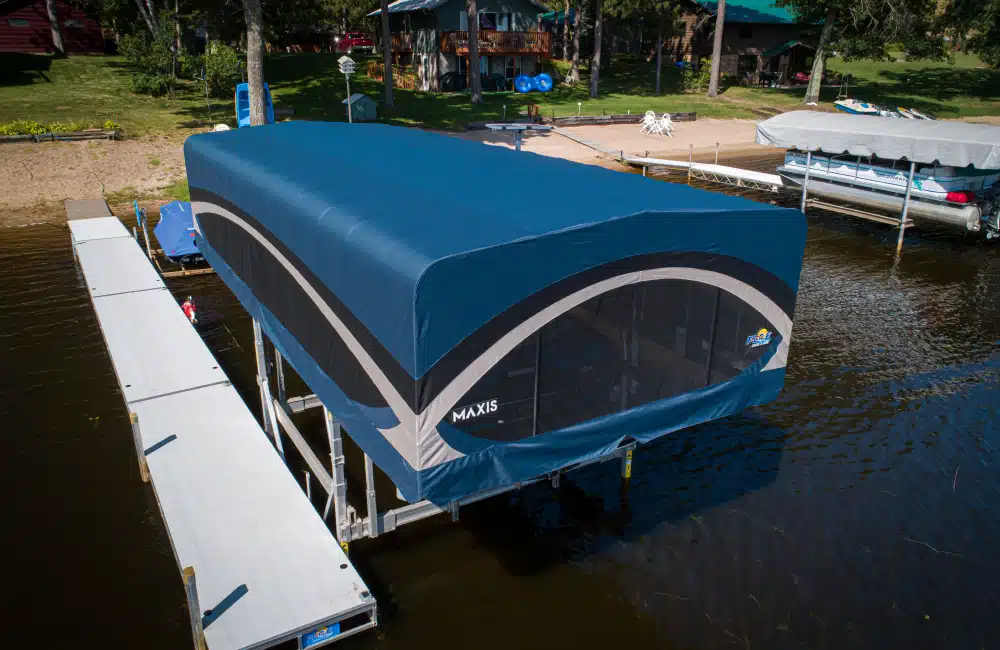
Maxis™ and AirMax™ Canopies
FLOE canopy systems are available in multiple sizes and configurations. Buyers should compare coverage, clearance, fabric, installation method and airflow for the selected boat and lift.
Minnesota Manufacturing and Dealer Support
FLOE manufactures products in Minnesota and works through authorized dealers across the United States and Canada. A dealer can help translate product options into a configuration for the property, watercraft and intended use.
Written Limited Warranties
Applicable FLOE products are backed by limited warranties. Coverage varies by product, component and use. Review the current written warranty rather than relying on a summary in marketing copy.
Recognize the Market Without Treating This as a Ranking
FLOE is one of several manufacturers serving the U.S. dock and boat-lift market. Buyers may also encounter the following companies while researching waterfront equipment:
-
ShoreMaster
-
Golden Boat Lifts
-
HydroHoist Boat Lifts
-
IMM Quality Boat Lifts
-
Basta Boatlifts
This list is not a ranking, endorsement or complete directory. Product lines, specifications, warranties, dealer coverage and availability can change. Confirm current information directly with each manufacturer, then use the evaluation criteria above to compare each proposal based on product fit, ownership requirements, service support and long-term value.
Use the Same Checklist for Every Proposal
-
Which product and configuration are being recommended for my property and watercraft?
-
What site measurements and watercraft information were used?
-
Which published specifications should I review?
-
How is the dock or lift installed, leveled and adjusted?
-
What must I inspect or maintain during the season?
-
Which components are expected to wear or require replacement?
-
How will installation, removal and storage be handled?
-
Which accessories are included, and which are optional?
-
What does the written warranty cover and exclude?
-
Who handles parts, service and warranty claims locally?
-
What is included in the complete quoted price?
-
How can the system adapt if the boat or waterfront layout changes?